FREE SHIPPING ON ORDERS OVER $100
hello@theneighborhoodeyedoctor.com

What Is Age-Related Macular Degeneration? Dry vs Wet AMD Explained
Discover the difference between dry and wet AMD, common symptoms, risk factors, and how early detection and regular eye exams help protect central vision.
Dr.Ogechi Ukegbu
2/4/20263 min read
What Is Age-Related Macular Degeneration? Dry vs Wet AMD Explained
Age-related macular degeneration (AMD) is a condition that affects the macula and can lead to loss of central vision, especially in adults over 50.
Age-related Macular Degeneration
Age-related macular degeneration (AMD) is the number one cause of legal blindness (vision
less than 20/200) in persons over the age of 50 in the United States. This disease has two
specific presentations: non-exudative or "dry" macular degeneration and exudative or "wet"
macular degeneration. AMD almost never causes complete loss of vision and usually
involves only the central vision, leaving the peripheral vision intact. Although two specific
presentations, wet and dry, are described, they are actually a spectrum of disease. The wet
form usually occurs after the dry form has been present for a long period of time and both
forms can be present in one patient. Eye care specialists ask patients to evaluate themselves
with an Amsler Grid each day and return immediately if any changes occur.
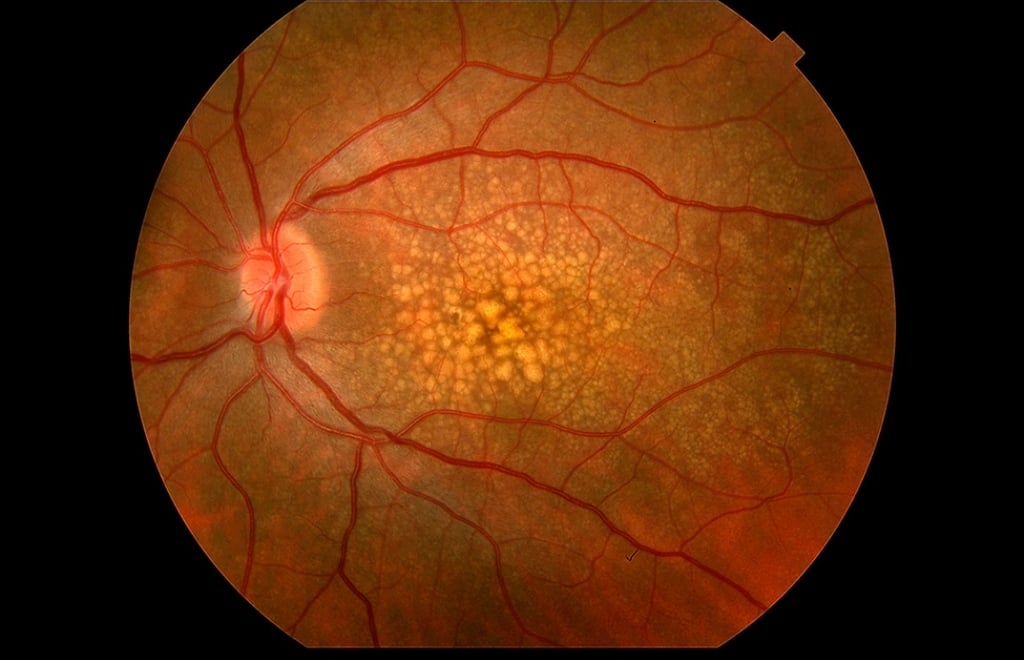
The dry form occurs when there are pigmentary changes and loss of pigmented cells in the
center part of vision along with the hallmark of macular degeneration, drusen. These are
small, white spots under the retina at the level of Bruch’s membrane, and are thought to
indicate problems with the normal function of the retinal pigment epithelium (RPE), the
pigmented cells. 80 to 90% of patients with macular degeneration have the dry form, but
only 10 to 20% of severe visual loss is in the dry form. The wet form, therefore, accounts for
the majority of severe visual loss in this disease.
DRUSEN
Drusen are the hallmark of macular degeneration. These usually precede the formation of wet changes
Understanding Wet Age-Related Macular Degeneration (AMD)
Overview
The wet AMD form is a more aggressive disease causing rapidly progressive vision loss. The
vision loss is due to abnormal blood vessels growing underneath the retina that leak fluid or
bleed. This fluid or blood underneath the retina impairs its ability to function, resulting in vision
changes such as distortion, blurriness, or loss of central vision. If left untreated, a scar develops
resulting in permanent irreversible vision loss.
Current Treatments and Research
At present, there is no cure for age-related macular degeneration despite extensive ongoing
research studies. However, there are treatments that can preserve your vision. Treatments for
dry AMD are presently aimed at slowing the development of drusen. There currently are no FDA
approved drugs for the treatment of dry AMD. However, large studies by the NEI known as
AREDS have demonstrated the benefit of eye vitamins at decreasing the risk of dry AMD
progressing to wet AMD. In addition, studies have shown that smoking and tobacco products
significantly increase the risk of dry AMD converting to wet AMD.
Treatment Options for Wet AMD
In the past, thermal laser treatment was used for treating wet AMD. While the laser would
destroy the abnormal vessels growing underneath the retina, it also creates a scar and often did
not restore the vision lost. Currently, wet AMD can be successfully managed with anti-VEGF
therapies such as Avastin, Lucentis, or Eylea and a newer “cold” laser called photodynamic
therapy (PDT). These drugs inhibit abnormal vessel growth and cause the bleeding or leaking
abnormal vessels to regress. These drugs have revolutionized the management of wet AMD
because they not only eliminate the abnormal vessels without creating a scar such as laser
therapy, but also restore and preserve vision when detected early.
Delivery of Medication
Because the eye is an immunoprivileged site meaning that medications taken by mouth do not
penetrate well into the eye, the medicine has to be delivered by an injection into the eye. All
these medicines simply convert wet AMD which can cause rapid vision loss back to dry AMD.
However, repeated injections are often necessary since the underlying disease process remains
and abnormal vessels may grow back to bleed or leak fluid. There are many different subtypes
of wet AMD. It is important to see your retinal specialist to determine a personalized tailored
therapy in selecting what medication is best for you and your eye.
Disclaimer
The information contained in this document is for informational purposes only. Diagnosis and
therapy should be based on a thorough examination by and recommendations of a qualified eye
care provider.
Symptoms
Blurry or distorted central vision
Difficulty reading
Trouble recognizing faces
Causes and Risk Factors
Aging
Family history
Smoking
Poor cardiovascular health
Diagnosis and When to See a Doctor
Regular eye exams and retinal imaging help detect AMD early.
Treatment and Management
Dry AMD is often managed with monitoring and lifestyle changes. Wet AMD may require injections or specialist care.
Summary and Next Steps
Early detection is key to preserving vision. Schedule regular eye exams if you are at risk.